Anion Gap Calculator Using Serum Chloride for Acid-Base Assessment
How the anion gap Measures
The anion gap is a useful way to assess the link between measured electrolytes in a serum chemistry panel and the body’s overall acid-base balance. It calculates the gap between common positively charged and negatively charged ions and assists identify whether an acid-base disorder is present, especially metabolic acidosis. Clinicians rely on it as a diagnostic aid because an https://anion-gap-calculation.com/calculators/urine-anion-gap.html abnormal result can indicate extra acids in the blood or toward a shift in the balance of ions that would otherwise be missed on routine lab values.
At its core, the anion gap indicates unmeasured anions in the blood. These are substances not directly listed on a basic electrolyte panel, yet they alter the overall charge balance. When these unmeasured acids rise, the gap often widens, creating a high anion gap. When the balance is altered by low protein levels, excess positively charged proteins, or testing issues, a low anion gap may appear. A normal anion gap does not always mean everything is fine, but it can narrow the differential diagnosis and direct next steps in clinical interpretation.
Because serum chloride is part of the calculation, a change in chloride concentration can markedly influence the result. That is why a practical anion gap calculator is more useful than memorizing the concept alone. It ties the raw blood chemistry values to the likely physiologic pattern behind the abnormality.
How to Use an Anion Gap Calculator Using Serum Chloride
An anion gap calculator usually asks for serum sodium, serum chloride, and serum bicarbonate. A few tools also include serum potassium. The goal is to compare the major measured cations with the primary measured anions and calculate the remaining gap. This is especially useful when reviewing an electrolyte panel in a patient with suspected metabolic acidosis or other electrolyte imbalance.
To use the calculator correctly, enter the values exactly as reported by the laboratory. Even slight differences in serum chloride or serum bicarbonate can change the result sufficiently to shift interpretation from a normal anion gap to an elevated anion gap or vice versa. If potassium is included, the calculator may produce a slightly greater result, but many clinicians read the version without potassium for standardization.
This is a simple workflow:
- Confirm the most recent serum sodium, serum chloride, and serum bicarbonate.
- Check whether the calculator uses serum potassium or excludes it.
- Submit the lab values exactly as reported.
- Review the output in the context of the patient’s symptoms and other lab values.
- If the result is surprising, think about repeat testing and broader clinical interpretation.
The calculator is best viewed as a diagnostic aid, not a self-contained answer. Its value increases when used together with the patient’s history, medication use, kidney function, and blood gas results. In that context, the anion gap becomes a practical way to assess acid-base balance rather than just a number on a screen.
Anion Gap Formula and Calculation Inputs
The standard calculation formula is:
Anion gap = serum sodium - (serum chloride + serum bicarbonate)
Some equations include serum potassium:
Anion gap = (serum sodium + serum potassium) - (serum chloride + serum bicarbonate)
The potassium-free version is used often because potassium is usually low in relation to the other ions and may vary less in everyday interpretation. Still, understanding whether potassium is included matters when comparing results across different calculators or reports. The key inputs are the chloride level and bicarbonate level, since these values directly shape the final number.
Each input represents part of the body’s serum chemistry profile. Sodium is the main measured cation, while chloride and bicarbonate are the main measured anions in routine testing. If bicarbonate drops, the gap may rise if chloride does not rise enough to offset the change. If chloride rises, the gap may fall even if the patient still has an acid-base problem. That is why the formula must be interpreted in combination with the full electrolyte panel and the clinical setting.
For practical use, remember that the anion gap is not measuring a single toxin or acid. It is indicating the presence of unmeasured anions and helping identify whether there is an anion deficit or a hidden acid load. This is especially valuable in metabolic acidosis, where the pattern of sodium, chloride, and bicarbonate can point toward different root causes.
Standard Anion Gap Range and Assessment
The normal range for the anion gap can change by laboratory because of variations in methods and reporting standards. That is why the reference range from the local lab should typically be used when available. In general, a result within the expected range suggests no obvious excess of unmeasured acids, but it does not rule out all disorders.
A high anion gap often indicates additional acids in the blood, while a normal anion gap may suggest that bicarbonate loss is being balanced by a rise in chloride. This pattern is common in some forms of non-gap metabolic acidosis. A low anion gap is rarer and often reflects low albumin, lab issues, or unusual protein states.
Interpretation should always review the overall pattern:
- High anion gap: suggests extra unmeasured acids.
- Normal anion gap: may reflect a chloride-driven bicarbonate loss or no major gap abnormality.
- Low anion gap: may indicate hypoalbuminemia, testing error, or excess positively charged proteins.
The important point is that a single result does not establish the patient’s condition. The anion gap is one piece of a wider acid-base assessment that includes symptoms, kidney function, medication review, and other labs. Its greatest strength is in pattern recognition, especially when paired with clinical interpretation.
Causes of an Raised Anion Gap
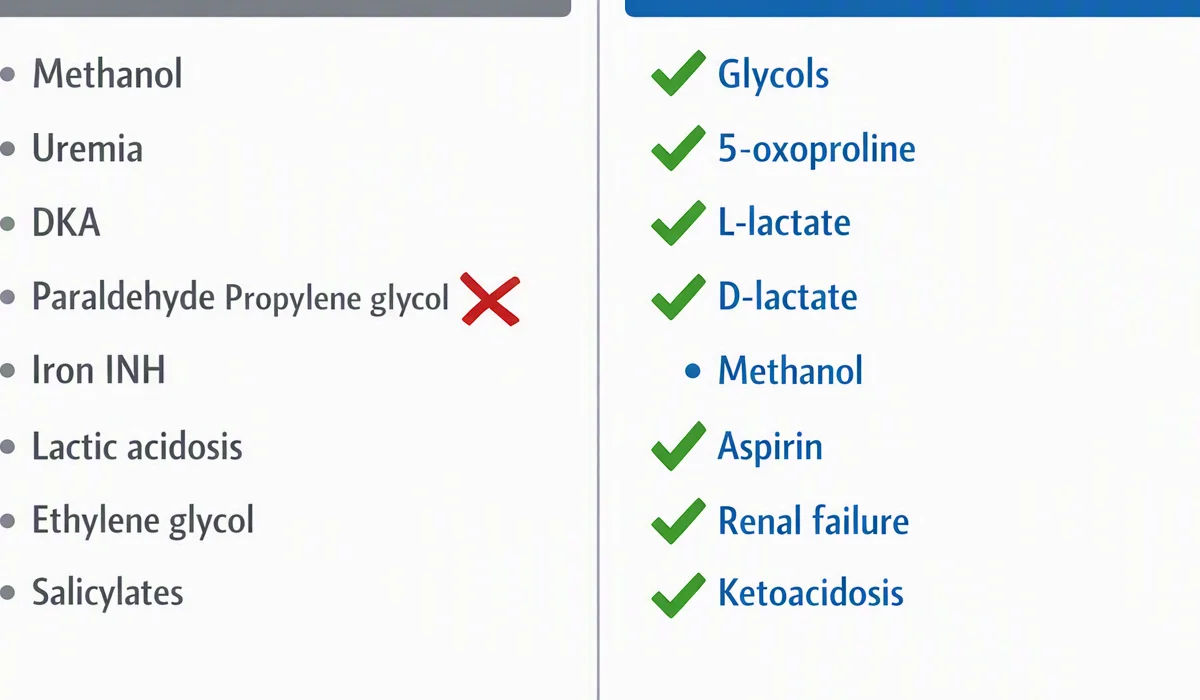
A increased anion gap usually indicates there are more unmeasured acids in the bloodstream than usual. Typical causes include lactic acidosis, ketoacidosis, renal failure, and ingestion of toxic alcohols. Every one of these conditions can create a distinctive acid-base pattern that becomes more apparent when the anion gap is calculated.
Lactic acidosis occurs when lactate builds up, often because tissues are not receiving enough oxygen or because metabolism is disrupted. Ketoacidosis is associated with ketone production, often seen in diabetes, starvation, or prolonged vomiting. Renal failure can reduce the body’s ability to clear acids, allowing them to accumulate. Toxic alcohols such as methanol or ethylene glycol can also raise the gap because their metabolites are acidic and dangerous.
In many of these settings, the anion gap provides a practical clue before the cause is fully known. That makes it a useful part of toxicity screening and acid-base review. Still, the number itself does not distinguish one diagnosis from another. A patient with severe metabolic acidosis and a high gap may need urgent evaluation to determine whether the cause is lactic, ketotic, renal, or toxic.
Further clues help refine the assessment:
- High lactate supports lactic acidosis.
- Hyperglycemia and ketones suggest ketoacidosis.
- Rising creatinine may point toward renal impairment or renal failure.
- A history of exposure raises concern for toxic alcohols.
Causes of a Reduced or Subzero Anion Gap
A reduced anion gap or even a below-zero result is infrequent and should require thorough evaluation. One common cause is hypoalbuminemia, since albumin is a important negatively charged protein that affects the gap. When albumin is low, the gap may appear artificially diminished even if the acid-base state is otherwise stable.
Another possibility is testing error or other measurement issue. A mislabeled sample, instrument issue, or specimen problem can distort sodium, chloride, or bicarbonate values. Because the formula depends on these inputs, even a small error can shift the result significantly. This is why unexpected values often call for repeat testing.
Less typical but significant causes include multiple myeloma and other forms of paraproteinemia. In these conditions, abnormal proteins can alter the charge balance and reduce the measured gap. A low anion gap should not be ignored if the patient has anemia, kidney dysfunction, bone pain, or other signs that might suggest a plasma cell disorder.
Common reasons to review a low or negative result include:
- Hypoalbuminemia
- Lab error
- Multiple myeloma
- Paraproteinemia
Because low values can be deceptive, the anion gap should always be reviewed in the full clinical context. A low result may be a hint, but it is rarely the final answer by itself.
How Serum Chloride Influences the Computation
Serum chloride serves a major role in the anion gap because it is positioned directly in the formula. A elevated chloride value reduces the calculated gap, while a reduced chloride value can increase it. This means changes in chloride can alter the apparent balance even if the underlying disease process has not changed. Knowing this relationship is essential for accurate interpretation.
Hyperchloremia can push the gap downward and is often seen when bicarbonate falls but chloride rises to maintain electrical neutrality. This pattern is typical in some forms of non-gap acidosis. Hypochloremia, on the other hand, may result to a greater calculated gap by reducing the subtraction term in the formula. Both patterns are cases of electrolyte imbalance affecting the final result.
This is why the anion gap is more useful when reviewed with the full electrolyte pattern. A patient may have a apparently normal gap simply because chloride has risen enough to offset bicarbonate loss. Another patient may show a elevated gap because chloride is not elevated despite a major acid load. The interaction between sodium, chloride, and bicarbonate is part of the body’s compensatory mechanism and should be viewed carefully.
Corrected Anion Gap and Albumin Adjustment
Albumin is a key factor affecting the anion gap because it has a negative charge. When albumin is low, the measured gap may appear smaller than it truly is. That is why albumin correction is often advised when evaluating the result in patients with low protein levels or suspected chronic illness.
A corrected anion gap raises the reported value upward to account for reduced albumin. While formulas can vary by institution, the overall purpose is the same: to avoid underestimating hidden acids when hypoalbuminemia is present. This is especially important in critically ill patients, where albumin may reflect nutritional status, inflammation, or illness severity.
Assessing protein status helps determine whether the reported gap is truly normal or simply masked by low albumin. In practice, the corrected value can reveal a hidden high anion gap that would otherwise be missed. That said, albumin correction is an aid, not a replacement for clinical judgment.
When albumin is low, keep in mind:
- Whether the uncorrected gap may underestimate acid burden
- Whether the patient has chronic illness or malnutrition
- Whether the corrected result changes the interpretation
Reading Results with Other Lab Values
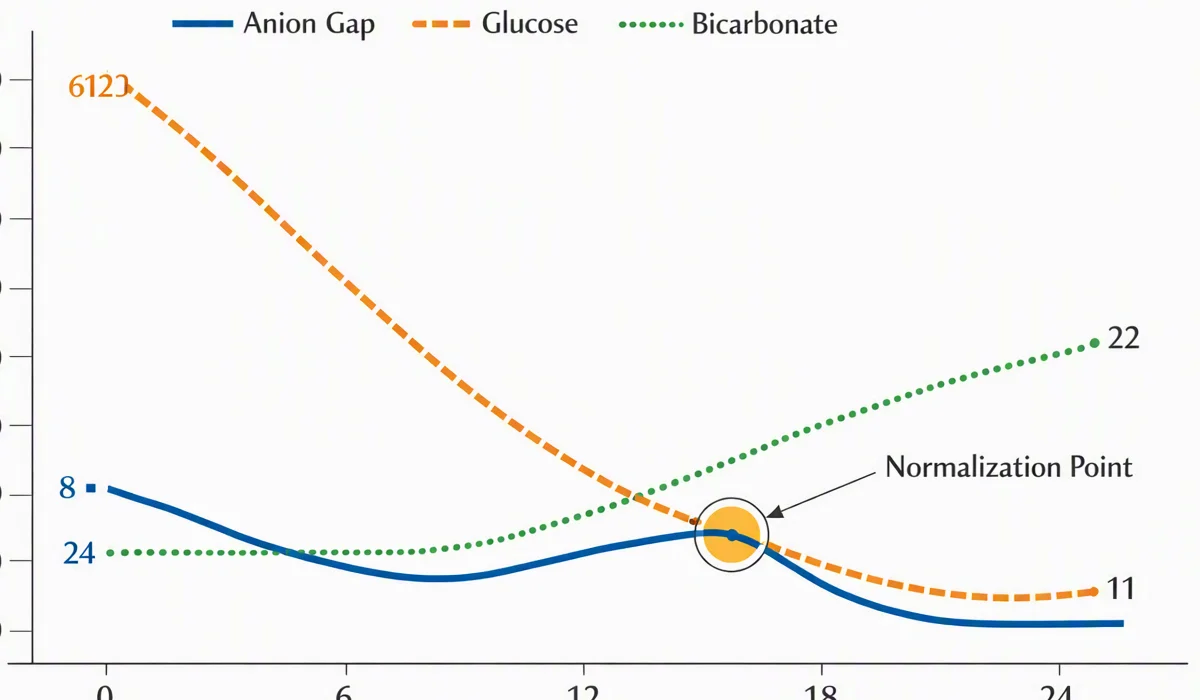
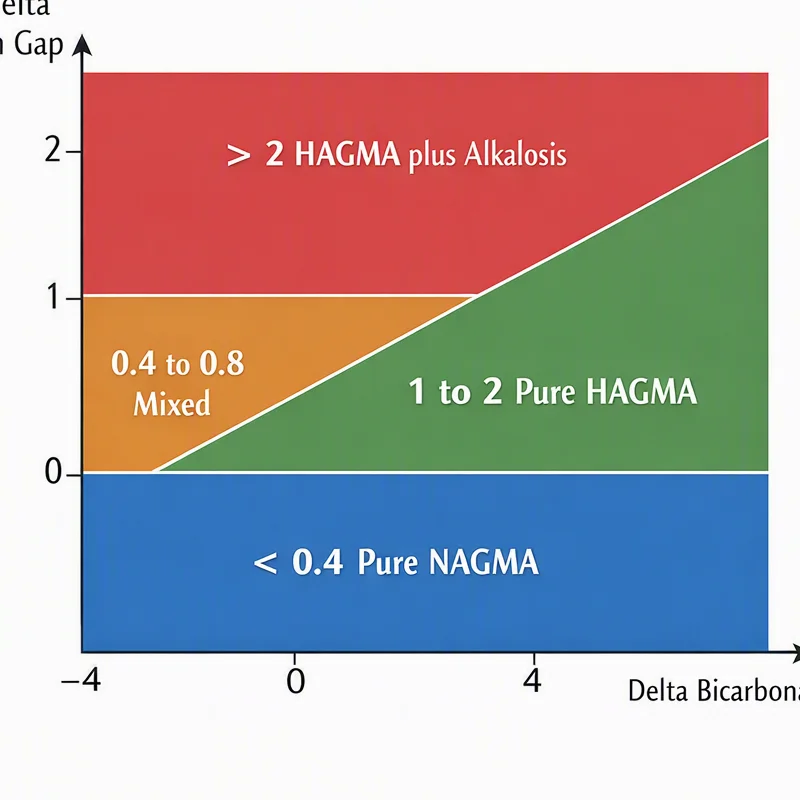
The anion gap becomes much more useful when interpreted with an arterial blood gas. A blood gas helps confirm whether the patient actually has acidemia or alkalemia and shows whether bicarbonate changes are part of a broader acid-base disorder. The measured pH provides the clearest immediate view of acidemia, while bicarbonate and carbon dioxide help distinguish metabolic from respiratory causes.
Blood gas analysis is especially helpful when the anion gap is abnormal but the patient’s symptoms are not obvious. For example, a high gap with low pH and elevated lactate strongly supports lactic acidosis. A high gap with ketones suggests ketoacidosis. If pH is near normal, there may be mixed processes or a strong compensatory mechanism masking the severity of the disorder.
Additional lab measurements can assist pinpoint the source:
- Lactate for suspected lactic acidosis
- Ketones for possible ketoacidosis
- Creatinine and blood urea nitrogen for renal failure
- Osmolal gap or exposure history for toxic alcohols
Using the anion gap with an arterial blood gas helps provide more reliable clinical interpretation. In combination, these tests can reveal whether the patient has a primary metabolic problem, a respiratory compensation pattern, or a mixed disturbance.
Caveats, Common mistakes, and When to Seek Clinical Review
Although the anion gap is useful, it has important limitations. The result can be influenced by measurement error, changing lab methods, and changes in protein concentration. It should never be interpreted in isolation. The same number may mean different things depending on the patient’s history, medications, kidney function, and overall clinical context.
One common pitfall is assuming that a normal value rules out acid-base disease. A patient can still have a substantial disorder with a normal gap, especially if chloride has risen to offset bicarbonate loss. Another pitfall is overlooking a low gap caused by hypoalbuminemia or paraproteinemia. It is also important not to overcall an abnormal result when there may be a simple analytical issue that deserves repeat testing.
Seek medical evaluation when the result is unexpected, when there are symptoms such as confusion, rapid breathing, or severe weakness, or when there is suspicion of serious causes such as lactic acidosis, ketoacidosis, renal failure, or toxic alcohols. Results should also be reviewed promptly if there is concern for multiple myeloma, unexplained paraproteinemia, or persistent electrolyte abnormalities.
In short, the anion gap is most valuable when it is used as part of a broader interpretation strategy rather than as a standalone label. A careful review of serum chloride, sodium, bicarbonate, potassium, albumin, and blood gas data helps turn a calculator result into useful clinical insight.
Frequently Asked Questions
How do you work out anion gap using serum chloride?
Use the common formula: serum sodium minus the sum of serum chloride and serum bicarbonate. Certain formulas also include serum potassium. The key idea is that serum chloride is subtracted along with bicarbonate, so changes in chloride can significantly change the result.
What is a high anion gap a sign of?
A high anion gap usually points to extra unmeasured acids in the blood. Common causes include lactic acidosis, ketoacidosis, renal failure, and toxic alcohols. It often points to metabolic acidosis, but the exact cause still needs clinical review.
Does a low albumin level alter the anion gap?
Yes. Albumin is a major negatively charged protein, so hypoalbuminemia can lower the measured anion gap. In that situation, albumin correction may be needed to avoid missing a hidden high anion gap.
Why is serum chloride important in the anion gap formula?
Serum chloride is one of the main terms in the formula, so it directly affects the calculation. Higher chloride lowers the gap, while lower chloride raises it. This is why hyperchloremia and hypochloremia can change how the result is interpreted.
When does an anion gap result need review by a clinician?
It should be reviewed when the result is abnormal, unexpected, or inconsistent with the patient’s condition. Clinical review is especially important if there are signs of metabolic acidosis, elevated lactate, suspected toxic alcohol exposure, renal failure, or concern for measurement error, multiple myeloma, or paraproteinemia.